Pre-Event vs Post-Event Sports Massage: Protocols for Runners and Athletes

Pre-Event vs Post-Event Sports Massage: Protocols for Runners and Athletes
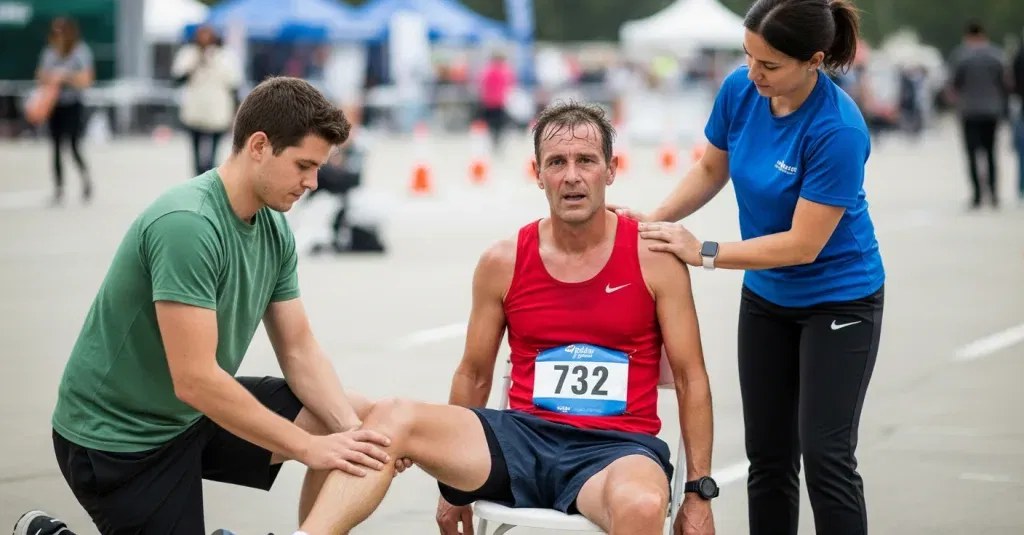
If you’ve ever stood near the start line of a race, you’ve probably seen a few runners off to the side getting quick bodywork. Later, after the medals, photos, and wobbly post-race walks, you’ll see massage tables set up again—this time with tired legs draped over them.
Same athletes. Very different massage.
Understanding the difference between pre-event and post-event sports massage is one of the most important distinctions massage therapists learn when working with active clients. The timing, pace, pressure, and even the intention of the session change depending on whether the body is about to perform or trying to recover.
For runners especially, this difference matters. A massage that feels incredible the day after a race could leave you feeling heavy and sluggish if done 20 minutes before the starting gun.
What Makes Sports Massage Different for Athletes?
Sports massage isn’t about relaxation. It’s about function.
Sports massage has been suggested as a way to help prepare an athlete for competition, support performance, assist recovery, and address sports-related musculoskeletal issues [1]. The therapist is always thinking one step ahead: What does this body need to do next?
For runners and other athletes, therapists use techniques like effleurage, petrissage, tapotement, friction, and vibration to influence circulation, muscle readiness, and tissue quality. But those techniques don’t stay the same from session to session. They’re adjusted based on timing and purpose.
This is where pre- and post-event protocols diverge.
Pre-Event Sports Massage: Waking the Body Up
Pre-event massage is about readiness, not relaxation.
Pre-event massage aims to enhance performance by preparing the body and mind for exertion [2]. Sessions are typically short and take place 10 to 60 minutes before the activity. The pace is faster, the pressure is lighter to moderate, and the strokes are stimulating rather than soothing.
Physiologically, this helps:
- Increase circulation so working muscles receive oxygen and nutrients
- Activate the nervous system so muscles respond quickly and efficiently
- Improve flexibility² without creating fatigue
- Decrease pre-competition anxiety [1] and support mental focus
- Warm tissues to reduce the risk of sudden strain
What you won’t find here is slow, deep work. That kind of massage can temporarily fatigue muscles—exactly what a runner doesn’t want before a race.
Pre-event massage is purposeful. It tells the body: We’re about to move. Let’s get ready.
Post-Event Sports Massage: Helping the Body Come Back Down
Post-event massage has a very different role.
Once the race is over, the body shifts into recovery mode. Muscles are tight, waste products have built up, and inflammation may be starting. This is where slower, restorative work becomes valuable.
Recovery strategies help the body return toward homeostasis after intense physical stress [3]. Research shows massage can statistically significantly reduce delayed onset muscle soreness (DOMS) by 13% [4] and reduce creatine kinase levels [5], a marker associated with muscle damage.
In practice, this means:
- Slow strokes help flush out metabolic waste
- Gentle compression and stretching restore muscle length and mobility
- Calming techniques reduce stress, tension, and fatigue [5]
- Timing may be immediately after the event or a day or two later [3]
This is the massage that helps runners feel like themselves again.
Why This Difference Matters for Runners
Runners place repetitive stress on the same muscle groups—calves, hamstrings, hip flexors, glutes, and lower back. The way those muscles are treated before a run versus after a run directly affects performance and recovery.
A therapist who understands this distinction knows when to stimulate tissue, when to calm it down, when to avoid deep work, and when deeper techniques can be supportive.
That level of decision-making comes from understanding anatomy, physiology, and timing—something students spend significant time practicing inside the Clinical Massage Therapy program at the Soma Institute.
What This Looks Like in the Real World
These principles show up clearly at large running events.
During the Chicago Marathon, the Soma Institute students and instructors provided massage support to runners before and after the race. Pre-race sessions were energizing and brief. Post-race work focused on relieving soreness and supporting recovery.
You can see how this played out in 160 Strong: How the Soma Institute Supported the Chicago Marathon.
Experiences like this allow students to apply what they’ve learned in real athletic environments, where timing, pressure, and purpose truly matter.
Learning to Think Like a Sports Massage Therapist
For people drawn to working with runners, athletes, and active clients, learning sports massage is less about memorizing techniques and more about developing critical thinking.
Inside the Clinical Massage Therapy program, students learn how to assess what the body needs based on what the client is about to do or has just done, when the massage is taking place, how tissues are presenting in the moment, and what the client’s goals are.
This kind of clinical thinking helps therapists build a career in sports massage that goes beyond basic relaxation and into meaningful, performance-focused support.
Students practice adjusting pressure, pace, and focus depending on whether the goal is preparation, recovery, or therapeutic support. The program is 9 months in normal time*, and hands-on experience with real clients helps these skills become second nature.
Where Sports Massage Skills Can Take You
When people hear “sports massage,” they often picture professional athletes. But athletic clients come in many forms³.
Massage therapists with sports massage training may work in settings related to massage therapy in professional sports, at local running events, in sports medicine clinics, or in private practice with active clients.
Many of these roles overlap with the broader role of massage therapy in sports medicine, where massage is part of a team-based approach to supporting performance, recovery, and injury management.
The need isn’t limited to elite competition. It’s anywhere people are moving their bodies and working hard toward personal goals.
Supporting People at Their Best — and After Their Hardest Efforts
There’s something meaningful about this kind of work.
You’re meeting people at moments they’ve trained for. Moments they’ve worked toward for months, sometimes years. Pre-event, you help them feel ready, focused, and confident as they step to the start line. Post-event, you help them recover after they’ve given everything they had.
You’re not just working on muscles. You’re supporting people as they chase goals that matter deeply to them.
That perspective is part of what draws many students to the Clinical Massage Therapy program. Learning to apply sports massage thoughtfully means stepping into those moments with skill and purpose, helping runners and athletes feel their best before and after their biggest efforts.
Understanding the difference between pre-event and post-event massage isn’t just technical knowledge. It’s part of becoming the kind of massage therapist who knows how to meet the body exactly where it is—and help it get where it’s trying to go.
Footnotes
[1] https://pmc.ncbi.nlm.nih.gov/articles/PMC2953308/
[2] https://pmc.ncbi.nlm.nih.gov/articles/PMC7228568/
[3] https://www.amtamassage.org/publications/massage-therapy-journal/post-event-sports-massage/
[4] https://pmc.ncbi.nlm.nih.gov/articles/PMC7228568/
[5] https://pmc.ncbi.nlm.nih.gov/articles/PMC10302181/
*Program length when completed in normal time
What You Need to Know Before Opening Your Own Massage Therapy Practice

You’ve imagined it more than once. A calm, welcoming space. Clients who trust you. A schedule you control. Work that feels meaningful because you see, firsthand, how much better people feel when they leave your table.
For many massage therapists, the idea of starting a massage therapy business grows naturally out of the work itself. After time spent learning techniques, understanding the body, and helping clients feel real relief, the next question often becomes: Could I do this on my own?
Opening a private practice is exciting. It’s also different from simply being a skilled massage therapist. You’re not just providing care anymore — you’re stepping into the role of small business owner, scheduler, marketer, record keeper, and space manager, all at once.
Before you take that step, it helps to understand what practice ownership actually looks like day-to-day, which skills matter most, and how your education prepares you for both the clinical and business sides of the profession.
What It Really Means to Open Your Own Massage Therapy Practice
Owning a massage therapy practice is about more than having your own treatment room. It’s about creating a professional environment where clients feel safe, cared for, and confident returning again and again.
Many massage therapists are self-employed, which allows them to set their own hours, choose their specialties, and shape a practice that fits both their lifestyle and their community. That independence is part of the appeal — but it also comes with responsibility.
In addition to providing therapeutic massage, you may find yourself:
- Writing detailed client notes after each session
- Managing bookings, cancellations, and reminders
- Maintaining intake forms and health histories
- Handling payments and tracking expenses
- Keeping your space, linens, and equipment clean and professional
- Promoting your services in your local area and online
- Staying current with licensing, insurance, and health regulations
The work you do with your hands remains the heart of the job. But the time you spend managing the practice is what keeps the doors open.
The Many Roles You’ll Play as a Practice Owner
When you open your own practice, you wear more hats than you might expect.
You’re the therapist, of course — assessing client needs, adapting techniques, and delivering treatments that support real wellness goals. But you’re also responsible for ensuring the business runs smoothly.
You’ll be responsible for:
- Performing therapeutic massage tailored to each client’s needs
- Maintaining detailed client records for continuity of care and professionalism
- Managing scheduling and bookings to keep your calendar organized
- Handling marketing and outreach to build and maintain a client base
- Managing finances and billing to keep the practice sustainable
- Maintaining your space and equipment so it reflects the level of care you provide
- Ensuring regulatory compliance with licensing and insurance requirements
This combination of clinical care and business management is what makes practice ownership rewarding — and what requires preparation.
Essential Skills Beyond Massage Technique
Your technical skills matter. But they’re only part of what helps a private practice succeed.
Therapists who thrive on their own often develop strengths in areas they may not have expected when they first entered the field.
Some of the most important include:
- Time management and organization so that client care and administrative work both get done
- Communication and professionalism that build trust and long-term client relationships
- Comfort with record-keeping and documentation for consistency and safety
- Basic financial awareness to track expenses, rates, and payments
- Confidence in promoting your services in ways that feel authentic
- A commitment to ongoing learning as techniques and client needs evolve
Strong client communication often becomes one of the biggest factors in whether clients return, refer others, and feel comfortable placing their care in your hands.
You may also find that building professional relationships in your community plays a role in how quickly your practice grows. Simple things like local referrals and connections can make a meaningful difference, which is why many therapists value networking tips for massage therapy students, even after graduation.
Education and Training: Preparing for Both Care and Business
Before you can open a practice, you need the proper education and credentials. Most states require graduation from an approved program and successful completion of a licensing exam.
This is where your training becomes more than technique.
The Clinical Massage Therapy program at the Soma Institute is designed to prepare students for the realities of professional practice. In addition to hands-on training in anatomy, assessment, and therapeutic techniques, students develop the professional habits and practical knowledge needed to work independently.
In a focused 9-month* timeline, students gain the foundation they need to pursue licensure and begin thinking about how they might eventually run their own practice.
Because practice ownership involves both clinical confidence and professional responsibility, education that emphasizes real-world preparation can make the transition feel much more manageable.
Deciding What Kind of Practice You Want to Build
Not every massage therapy practice looks the same. One of the benefits of being self-employed is that you can design a model that fits your goals and your clients’ needs.
You might choose to:
- Open a traditional private practice in a dedicated space
- Offer in-home services as part of a mobile massage therapy business
- Focus on specialized populations such as athletes, prenatal clients, or chronic pain clients
- Partner with other health professionals in a shared wellness space
- Eventually grow into a multi-therapist practice
No matter which path you choose, the goal is the same: creating a professional environment where clients feel comfortable returning regularly.
The Importance of Ethics, Professionalism, and Boundaries
As a practice owner, professionalism carries even more weight. You are fully responsible for the environment you create and the experience you deliver to clients.
Maintaining clear expectations, appropriate boundaries, and consistent standards is essential to building trust. Many therapists find it helpful to revisit ethics in massage therapy as they transition to independent practice, where they are solely responsible for policies, client interactions, and professional conduct.
This attention to professionalism is part of what turns first-time clients into long-term ones.
Preventing Burnout Before It Starts
Owning a practice can be incredibly rewarding, but it can also be physically and mentally demanding. Scheduling wisely, setting boundaries around your availability, and pacing your workload all play a role in your long-term success.
Understanding how massage therapy can help prevent burnout isn’t just helpful for clients — it’s important for you as a practitioner, too.
Building a schedule that supports your well-being helps ensure you can continue doing this work for years to come.
Continuing to Grow After You Open
Your education doesn’t stop once you graduate or once your practice opens. Techniques evolve. Client needs change. New approaches to care continue to emerge.
Many practice owners prioritize continuing education for massage therapists to stay current and confident in their work. Ongoing learning also gives you new tools to offer clients and keeps your work interesting and engaging.
This mindset of continuous growth often starts during your training in the Clinical Massage Therapy program and continues throughout your career.
What to Consider Before You Open Your Doors
Before launching your practice, take time to think through:
- Where you will practice and how the space will feel to clients
- How many clients you can realistically see in a day or week
- How you will manage scheduling, payments, and record-keeping
- What supplies and equipment you will need to maintain
- How you will introduce your services to your local community
- What policies you will set around cancellations, late arrivals, and communication
Thinking through these details early helps you feel more confident when you’re ready to begin.
Turning the Idea Into a Reality
Opening your own massage therapy practice is a natural next step for many therapists who want greater independence and the ability to shape their work environment.
With the right preparation, realistic expectations, and a strong educational foundation, the goal becomes achievable rather than overwhelming.
For students who are already thinking about where this path might lead, the training you receive in the Clinical Massage Therapy program at the Soma Institute is designed to prepare you not just to perform massage, but to step into the professional role that practice ownership requires.
Understanding what it takes before you begin helps ensure that when you do open your doors, you’re ready for both the care and the responsibility that come with it.
*Program length when completed in normal program time
160 Strong: How The Soma Institute Supported the Chicago Marathon
If you were in downtown Chicago on October 12, you probably felt the energy in the air — the rush of runners, the cheers and high-fives, and volunteers working hard to keep everything moving. Among them was a dedicated team from The Soma Institute. As the only massage therapy school volunteering at the Chicago Marathon, they showed up in force with 160 students, faculty, and graduates lending their skills to support thousands of athletes at one of the world’s most celebrated races.
A Unique Role in a World-Class Event
The Bank of America Chicago Marathon isn’t just another race — it’s a global event that attracts tens of thousands of runners from all over the world. Behind the scenes, it takes an army of volunteers and medical professionals to make sure participants are cared for before, during, and after the 26.2-mile journey.
That’s where Soma comes in. Over the years, the school has built a one-of-a-kind partnership with the marathon, making them the only massage therapy school providing sports massage to runners.¹ This is no casual commitment — it’s an integrated role in the official medical team, right alongside doctors, nurses, athletic trainers, podiatrists, and physical therapists.
Soma’s Program Director, Michael Hovi, served as the Medical Massage Therapy Coordinator for the event, ensuring that all 160 Soma volunteers were organized, prepared, and ready to deliver care when runners needed it most.
How Clinical Massage Therapy Connects to the Health and Wellness Career Space
By Joan Hannant, Founder & CEO of The Soma Institute

- Clinical massage therapy is a growing field within the $6.3 trillion health and wellness industry, focusing on therapeutic care for pain relief, stress reduction, and recovery.
- This practice supports holistic and preventive health, aligning well with broader wellness trends.
- Career options for clinical massage therapists span healthcare facilities, wellness centers, corporate wellness, and private practice.
- Expanding areas like wellness tourism, mobile services, and niche specializations offer new career paths for therapists.
- The Soma Institute’s program equips students with the skills needed to succeed in the wellness-driven economy.
The health and wellness industry has grown dramatically in recent years, reflecting a global shift toward preventive care, holistic well-being, and proactive health management. According to the Global Wellness Institute, the wellness economy reached $6.3 trillion in 2021 and is projected to hit $9 trillion by 2028. As wellness becomes an increasingly central priority worldwide, careers in fields like clinical massage therapy are evolving and expanding, with new opportunities emerging to support clients’ physical and mental health needs.
Building a Career in Sports Massage: How Education Sets You Apart
By Joan Hannant, Founder & CEO of The Soma Institute
- Sports massage therapy education offers therapists advanced training in anatomy, biomechanics, and injury management.
- Accredited certifications, such as those from The Soma Institute, provide a competitive advantage in the sports massage field.
- Graduates have career opportunities across healthcare, sports teams, private practices, and corporate wellness.
- The wellness industry’s growth is creating emerging roles in wellness tourism, mobile massage, and virtual wellness coaching.
- Soma Institute graduates are well-prepared to thrive in the dynamic health and wellness
As the demand for skilled sports massage therapists rises, education has become a key factor in building a successful career in this specialized field. With the physical demands placed on athletes, coaches and sports teams increasingly seek therapists with targeted training who can address these needs through specialized techniques. High-quality sports massage therapy education ensures therapists are prepared to meet state licensing requirements, deepen their knowledge of sports-specific care, and ultimately stand out in a competitive job market.